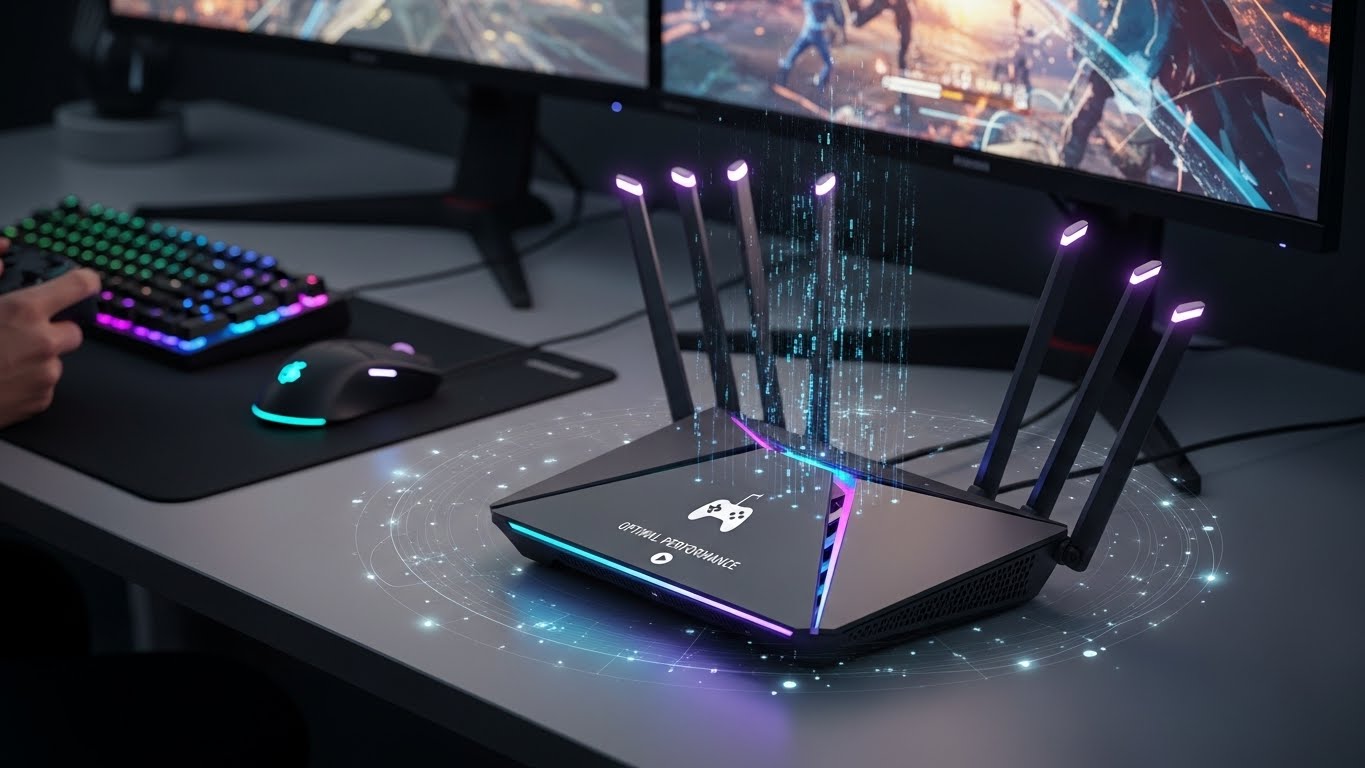
Lag spikes in the middle of a match and buffering during movie night usually aren’t “internet problems” — they’re Wi-Fi problems. The right router can cut latency, stabilize connections, and keep your speeds consistent across the house.
Disclosure: Some links may be affiliate links. As an Amazon Associate I earn from qualifying purchases.
Below are the top routers you provided (kept in the same order), picked for low latency, strong range, and easy real-world performance.
What to look for (gaming + streaming priorities)
- Low latency: QoS / traffic prioritization, stable CPU, less interference
- Strong range: antenna design + placement flexibility, solid 2.4GHz coverage
- Fast lanes for modern devices: Wi-Fi 6/6E/7 features (especially helpful in crowded Wi-Fi areas)
- Wired wins for gaming: 2.5GbE ports are great if you have fiber or a fast modem
- Security + updates: WPA3 and ongoing firmware support
1) TP-Link Archer AXE75 (AXE5400 Tri-Band Wi-Fi 6E) — Best for Low-Interference Gaming + Smooth Streaming
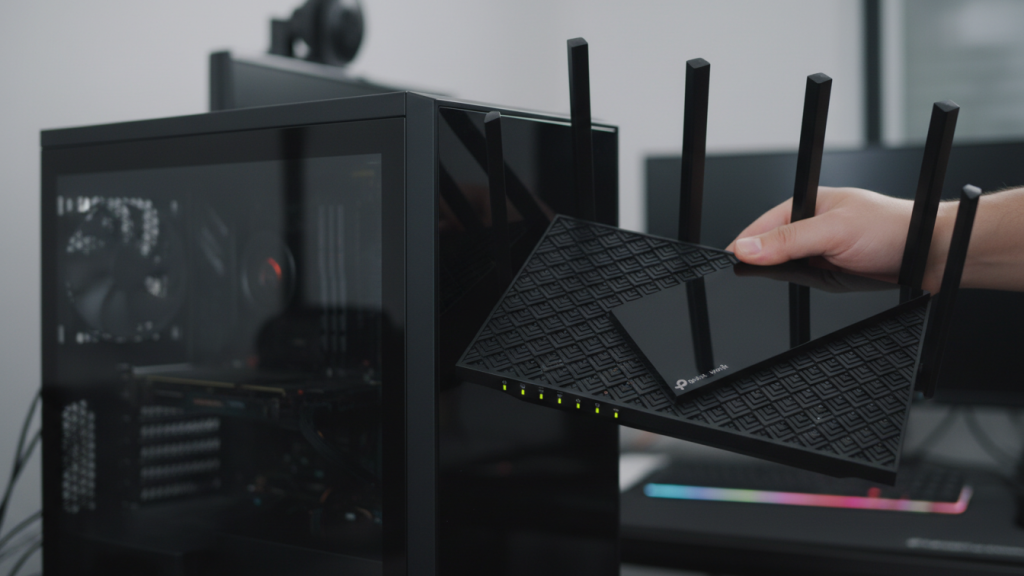
What it is
A tri-band Wi-Fi 6E router that adds the 6GHz band, designed to reduce congestion and improve consistency for newer devices. It also highlights features like 160MHz support, VPN, and WPA3 security.
Why it’s great for gaming/streaming
If you live in an apartment or neighborhood with a lot of nearby Wi-Fi networks, the biggest upgrade isn’t “more speed” — it’s less interference. The 6GHz band can feel noticeably cleaner for compatible devices, which often translates to steadier ping and fewer random spikes.
Pros
- 6GHz band can reduce congestion (big win in busy Wi-Fi environments)
- Strong all-around balance for gaming + 4K streaming
- Good “set it up and forget it” style for most households
Cons
- 6GHz benefits require Wi-Fi 6E-capable devices
- If you’re mostly wired for gaming, you may care more about multi-gig ports than extra Wi-Fi bands
Best for: gamers/streamers who want consistent wireless performance in crowded Wi-Fi areas.
2) GL.iNet GL-MT6000 (Flint 2) Wi-Fi 6 — Best for Power Users (2.5GbE + VPN-Friendly)

What it is
A Wi-Fi 6 router positioned for high-speed home networking with 2 × 2.5GbE Ethernet ports and strong VPN-oriented features.
Why it stands out
For competitive gaming, the lowest-latency setup is still wired Ethernet. The big appeal here is the 2.5GbE ports, which are great if you have a fast internet plan, a multi-gig modem/ONT, or you move large files locally (NAS/PC streaming).
Pros
- Dual 2.5GbE ports are excellent for fast internet + wired gaming
- Great for advanced users who like deeper network control
- VPN features can be useful for privacy or remote access needs
Cons
- Not as “plug-and-play simple” as mainstream consumer routers for some people
- If you don’t need multi-gig or advanced features, it may be more router than you need
Best for: power users, fast-internet households, and anyone who wants serious wired performance.
3) TP-Link Archer AX21 (AX1800 Dual-Band Wi-Fi 6) — Best Budget Pick That Still Feels Fast
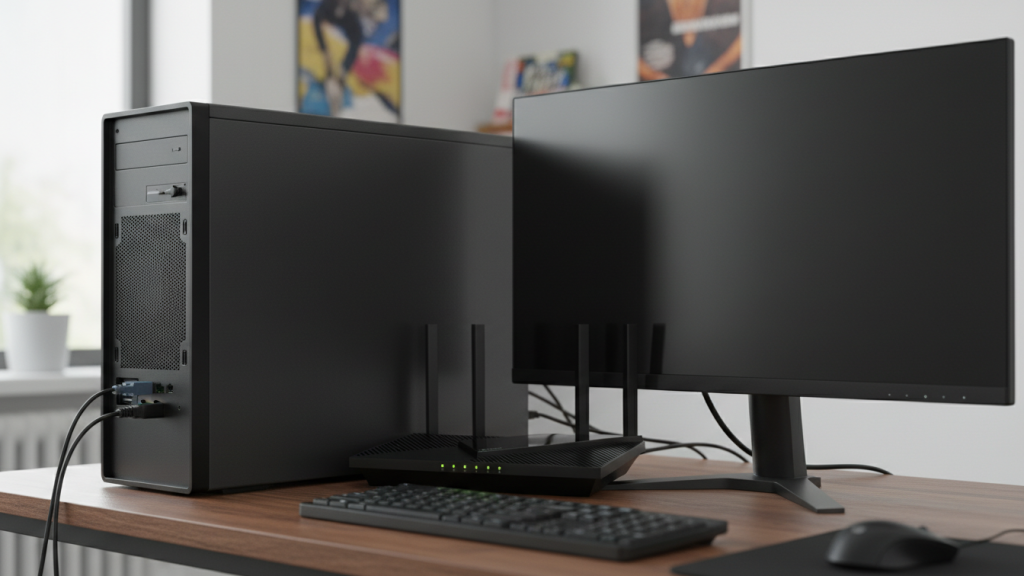
What it is
A dual-band Wi-Fi 6 router designed for straightforward performance and easy setup, with mesh support and typical gamer-friendly basics.
Why it’s worth considering
Not everyone needs cutting-edge specs. If your internet plan is moderate and your home isn’t huge, this category can deliver a big quality-of-life upgrade over older routers — especially for streaming reliability and general responsiveness.
Pros
- Strong value for typical gaming + streaming needs
- Wi-Fi 6 improvements over older Wi-Fi 5 routers (efficiency with multiple devices)
- Easy choice for smaller homes/apartments
Cons
- No 6GHz band (more competition on 5GHz in congested areas)
- Not ideal if you’re pushing very high speeds or have lots of heavy users at once
Best for: budget buyers who want reliable streaming and solid gaming without overpaying.
4) TP-Link Archer BE500 (BE6500 Dual-Band Wi-Fi 7) — Best “Future-Proof” Upgrade with Multi-Gig Ports
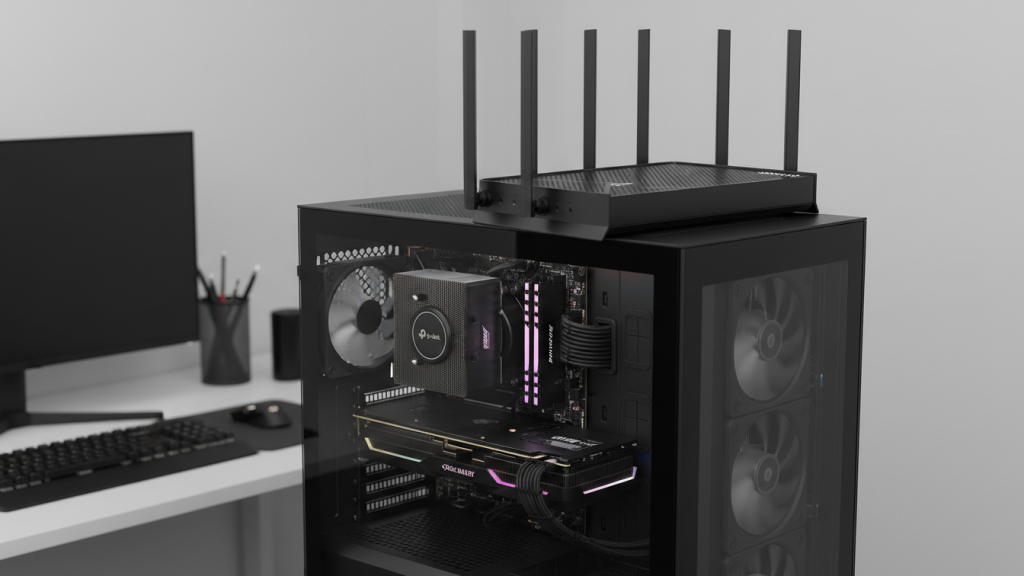
What it is
A dual-band Wi-Fi 7 router with dual 2.5Gbps ports, USB 3.0, and security features like HomeShield/IoT options (as described).
Why it stands out
Wi-Fi 7 is about more than raw speed — it’s about handling busy networks better and improving efficiency on supported devices. The 2.5GbE ports also make it a strong match for faster internet plans and wired gaming setups.
Pros
- Wi-Fi 7 for newer devices and longer-term relevance
- 2.5GbE ports are great for fast plans and wired performance
- Good pick if you’re upgrading your network for the next few years
Cons
- Dual-band means no dedicated extra band to escape congestion (depending on your environment)
- Benefits depend on having Wi-Fi 7 devices (you still get improvements, but full advantage needs compatible gear)
Best for: people upgrading for the next 3–5 years and anyone who wants multi-gig wired options.
Which router is the best overall?
✅ Best overall for most gamers + streamers: TP-Link Archer AXE75 (Wi-Fi 6E tri-band)
If you want the most noticeable “feel” improvement on Wi-Fi — fewer hiccups, fewer random ping jumps, smoother streaming — tri-band with 6GHz is a practical win in many homes.
Best for wired gaming + fast internet plans: GL.iNet Flint 2
If you’ll actually use multi-gig Ethernet and want stronger advanced controls, this is the most “serious” networking pick.
Best budget choice: TP-Link Archer AX21
Great when you just want stable performance for normal gaming + streaming without paying for top-tier features.
Best future-proof upgrade: TP-Link Archer BE500 (Wi-Fi 7)
Ideal if you’re buying once and keeping it for years, especially with multi-gig ports.
Real-world setup tips (these matter more than specs)
- Place the router high and open (not inside a cabinet).
- Put it near the center of your home, not at one far end.
- For gaming: wire your console/PC if possible (even one Ethernet cable makes a huge difference).
- Use 5GHz for gaming/streaming devices when close enough; use 2.4GHz for longer range and smart home devices.
- If your home is large or has thick walls, consider mesh instead of pushing one router too hard.
Quick FAQ
Is Wi-Fi 6E worth it for gaming?
If you have compatible devices and live in a congested Wi-Fi area, yes — the 6GHz band can reduce interference and make latency feel more stable.
Do I need Wi-Fi 7 right now?
Not required, but it’s a solid “buy once” option if you’re upgrading and plan to keep your router for years.
What’s the #1 upgrade for low latency?
Ethernet. If you can wire your gaming device, that beats any Wi-Fi spec upgrade.